
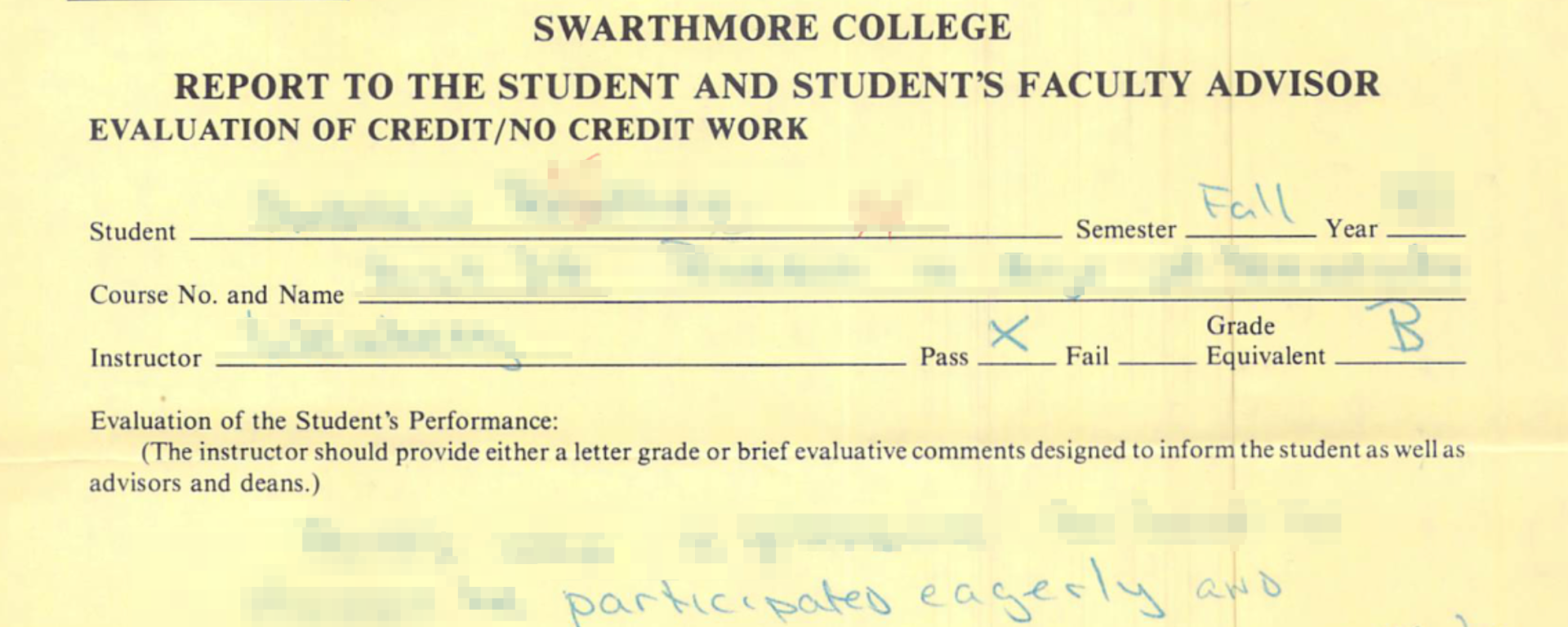
Grading is an important and time-consuming task. Careful, personalized feedback helps students learn, but timely feedback is a challenge. Swarthmore has few tools that handle simple grading automatically. Moodle quizzes can score multiple-choice questions and the WeBWorK math homework system gives students real-time feedback. But essays are different and require judgment and nuance.
A new category of AI tools integrate with learning management platforms like Moodle, automatically import assignment prompts and student submissions, and use instructor-provided instructions and rubrics to generate draft feedback for each student. A human grader can then review and finalize the feedback and grade.
If AI assistance could cut feedback turnaround from two weeks to one, that’s a meaningful benefit for students waiting to understand where they went wrong before the next assignment. And if the AI-generated feedback is good, professors might be able to free up time for other pursuits.
There are some major questions to wrestle with. If AI responses are consistently “good enough,” does careful human review gradually give way to a quick skim or even less? Would Swarthmore students accept AI feedback? Are we, as a college, okay with the plethora of issues around AI such as potential bias and ethical and environmental concerns?
We want to hear from you.
ITS does not currently have plans to add AI grading features to Moodle, and we would not implement any without extensive faculty input. But we’re paying attention to where this technology is heading, and your perspective matters.
Whether you’re a student wondering how this might affect your experience, or a faculty member curious or skeptical about the possibilities, we’re interested in your thoughts. Reach out to your Academic Technologist to discuss.