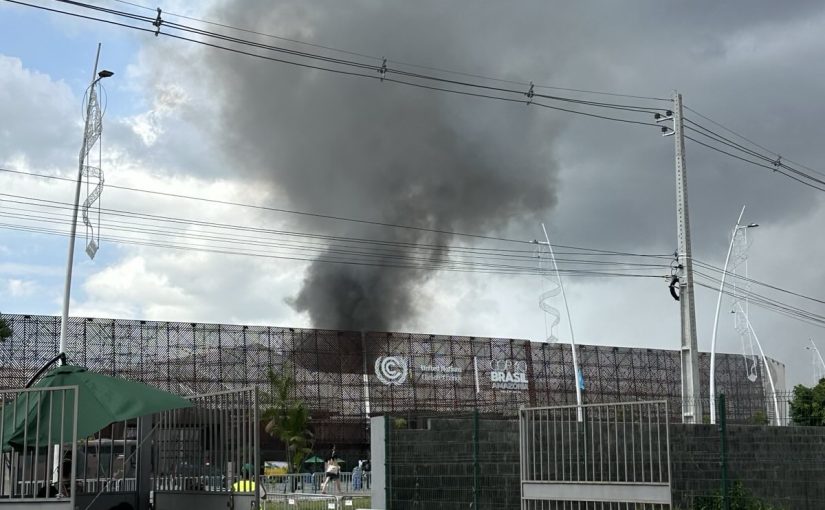
On November 21, 2025, the world had surpassed 1.4°C in global warming. We have seen the world’s top 10 hottest years in human history recorded in the past 10 years. We have seen substantially over four million deaths from the climate crisis. Despite mass global mobilization, governments and corporations continue to spike fossil fuel expansion, with emissions globally continuing to rise year after year. In Gaza, over 70,100 people—in large proportion, children—have been murdered by the Israeli military or killed through the ongoing genocide that has become one of the highest emitting events in the world.

Simultaneously, on November 21, 2025, over 195 national delegations from around the globe descended on Belém, Pará, Amazônia, Brasil for the 30th meeting of the Conference of the Parties to the United Nations Framework Convention on Climate Change. The themes were clear. Discussion of roadmaps, fossil fuel phaseout, just transition, and deforestation. Questions also abounded. Would this signal a new era of indigenous participation in the process? The Indigenous People’s COP? Would this be an embrace of science and multilateralism and progress in the face of the United States’ backpedaling? The COP of Truth? During the first week, indigenous land defenders from the Amazon region—the very region of Brazil in which Belém and Pará are located—stormed the gates of the makeshift COP30 venue. They protested their lack of accreditation to the conference, despite the accreditation of thousands of fossil fuel lobbyists, and demanded demarcation of indigenous lands and protection of their territorial rights.
The response: mass militarism outside the venue.

I remember the first day I entered the venue during the second of week of negotiations. We passed soldier after soldier with guns drawn, passing dozens of militarized cars and tanks. All of this had been prompted by a letter from UNFCCC Executive Secratary Simon Steil, who had repudiated the Brazilian hosts for the conditions in the venue—calling it dangerously hot, saying the venue was at risk of massive flooding (every day would be interrupted by an intense tropical storm in the mid-afternoon), and saying they must secure the venue with further security.
On December 21, 2025, the venue caught on fire.
All the signs were there. The venue was extremely hot. As Greenpeace Brazil organizer Pedro Batista told me for the Heat & Health podcast I’m working on in review, “the world is getting hotter, and Belém seems to be the capital.” The venue was makeshift, and temperatures were high. There were no fire alarms; protesters at the UNFCCC approved actions that littered the halls were told they were not allowed to use megaphones, as that was part of the fire response plan. The electricity systems were makeshift as well.
Earlier that morning, I joined a strategy meeting in the negotiations with a group of non-governmental youth leaders from various places around the world. The group called itself A.N.G.R.Y.. Outside of the negotiations, we also discussed the insurmountably high temperatures—I explicitly stated to an organizing friend from Colombia: the fire was a disaster waiting to happen.
A couple of hours later, while feverishly finishing preparations for a call with Mayor-Elect Zohran Mamdani’s team in part about the ongoing negotiations in one of the venue’s two computer centers. I started to hear whispers of a fire circulating the room. Some people started to leave one by one. There was relative confusion.
Eventually, one of the incredible local volunteers staffing the computer center made an announcement: there is indeed a fire, and we were told to evacuate. Leaving the venue, I could see smoke emanating down the wide hallways from where the pavilions had caught on fire. After having evacuated and having taken the call with Mamdani’s team from the floor of the Green Zone, I started to catch up with others. What had caused the fire? Is everyone okay?
The photos I was shown in response and the view from where we stood made one thing clear: the plenary the Brazilian Government had hoped would occur early today would not move forward.
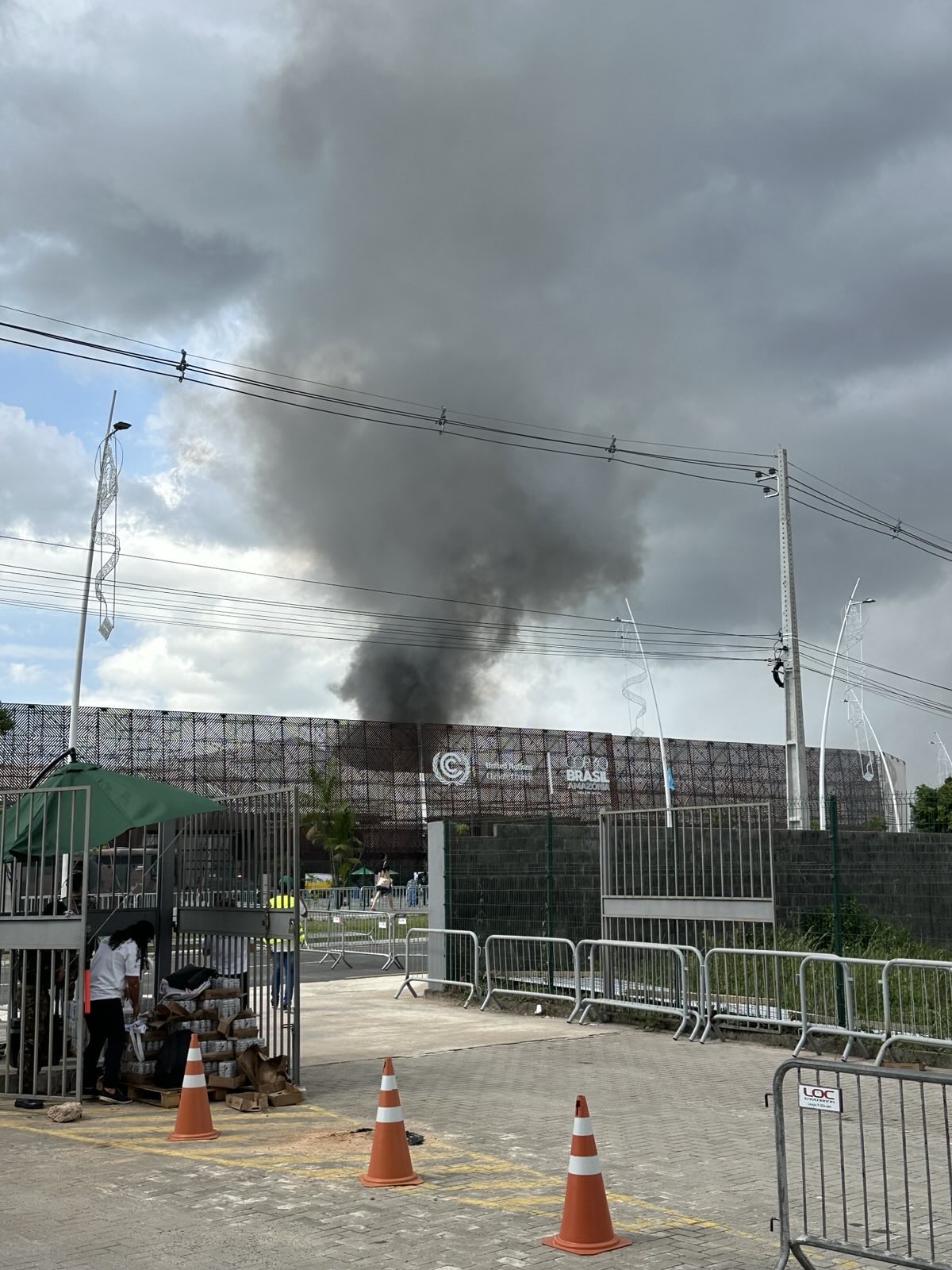
Here we are: the 30th Conference of the Parties and thirty years of inaction to reduce emissions and fossil fuel production by governments. Here we are: the first COP since the Paris Agreement, where keeping emissions to 1.5 degrees centigrade seems officially impossible. And here we are: in the heart of the Amazon, and the crisis we’re supposed to be fighting is disrupting the climate negotiations themselves.
Leaving the venue that day was a moment of taking stock of the global moment we’re in: fossil fuel billionaires are literally burning the climate conference, they’re literally burning the Amazon, and they’re literally burning our future.
As I reflected in a video I posted for Fridays For Future, when the negotiations closed, the outcome and process were dangerous. The final decision—which made no mention of fossil fuel phaseout—was gaveled over the objections of Latin American countries such as Latin America. The final decision did not represent the ambition of what was called the “COP of Truth.”
As the Colombian negotiators said in the closing plenary: “the COP of the Truth cannot support an outcome that ignores science… denying the best available science does not only put the climate regime at risk, but our own existence. Which message are we sending the world, Mr. President?”
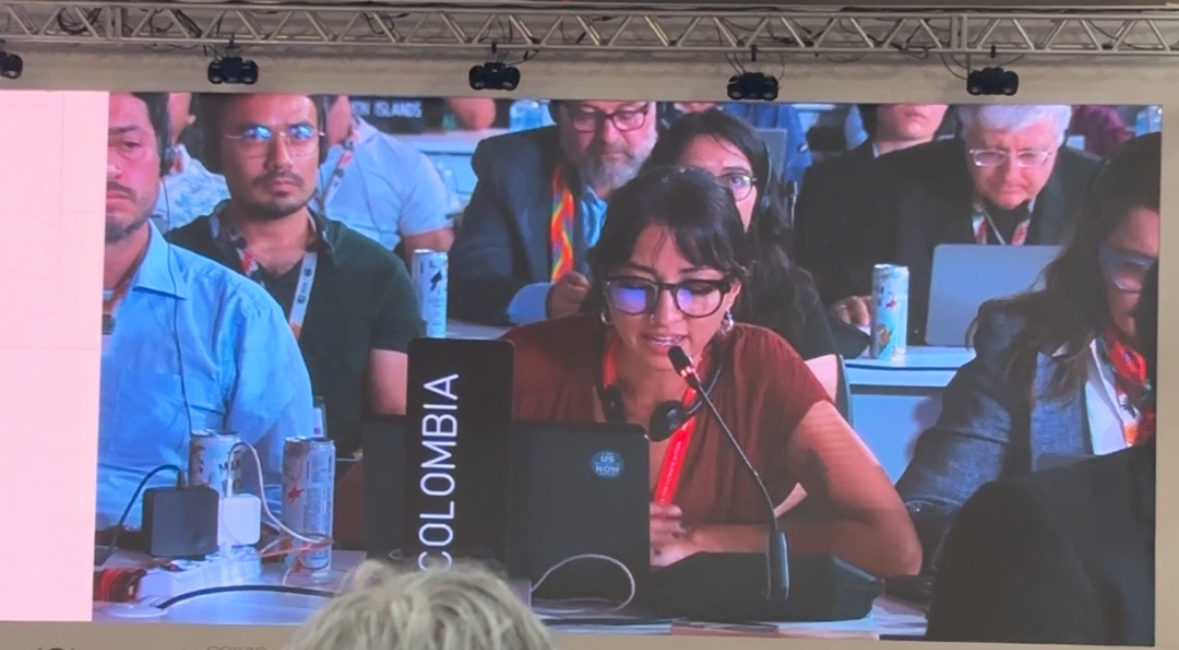
Nonetheless, the Presidency of the COP moved forward with gaveling through the decisions over Colombia and other nations. It shows us clearly what many have already stated: the UNFCCC process is not where ambitious paths forward to fossil fuel phase-out will play out.
Perhaps, the glimmer of hope coming out of the Conference is Colombia’s and the Netherlands’ announcement of the First International Conference on the Just Transition Away from Fossil Fuels to be hosted in Santa Marta, Colombia, in April, outside of the UNFCCC process. Will true international action towards non-proliferation and the phase-out of fossil fuels move forward? Or will our future fall apart as climate negotiations burn at the hands of fossil fuel oligarchs?
These are just some of the many questions COP30 is leaving me with.
Solar drehgestell
[url=https://moypvdom.com/]Photovoltaik kosten Schönebeck
[/url]